Bigger SUVs, Bigger Risks?

Finnegan Flynn
| 04-11-2026
 · Vehicle Team
Many would assume the biggest SUV in the lot is likely to be the safest one to put your family in.
But size and safety don't move in a straight line, and the reasons why are worth knowing before you sign anything.
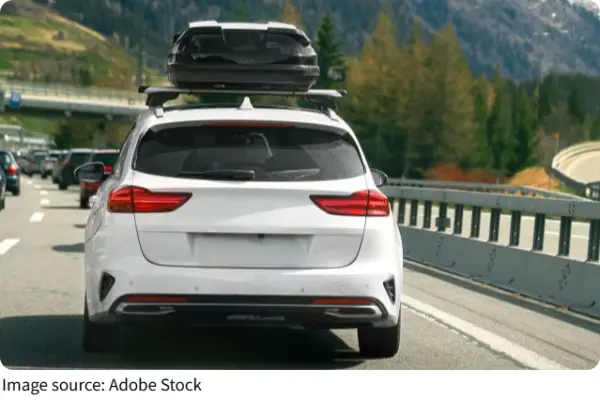
What helps you may hurt them
Physics plays favorites. In a two-car crash, the heavier vehicle pushes the lighter one backward and absorbs less of the impact itself. That's why a 5,500-pound Chevrolet Suburban tends to fare better than a 3,200-pound Honda Civic in a head-on hit. But that advantage is one-sided. The same mass that protects you makes the other driver's outcome worse, which is exactly why the Insurance Institute for Highway Safety studies compatibility between vehicles, not just single-car results. Bigger doesn't remove risk. It relocates it.
The rollover penalty
Taller bodies sit higher off the ground, and a higher center of gravity makes a vehicle more likely to tip in a sharp swerve. The NHTSA rates rollover risk on a star scale, and large SUVs often score lower than sedans on that specific test even when they ace frontal crash ratings. A 2021 study by the IIHS found that SUVs still carry higher driver death rates in single-vehicle rollover crashes than cars do. So the very height that makes you feel commanding behind the wheel is the same trait that works against you when a moose or a sharp curve shows up.
Structure beats sheet metal
A heavy body built on a weak frame is worse than a lighter body built on a strong one. Modern unibody designs with high-strength steel, like the platform under the Volvo XC90, can outperform older body-on-frame trucks in crash tests. What matters is how the front end absorbs energy, how the cabin holds its shape, and whether the airbags deploy at the right moment. Crumple zones are engineered, not measured in pounds. You can check a vehicle's rating at the NHTSA and IIHS sites before you buy, and those scores say more about survival than curb weight ever will.
Bigger blind spots, bigger problems
A tall hood and thick pillars block more of what's around you. The IIHS has documented that SUVs and pickups with high front ends strike pedestrians higher on the body, causing more severe injuries. And a driver who can't see a child behind the tailgate is a driver who can't react in time. Rear cameras and automatic braking help, but they're aids, not substitutes. Sit in the driver's seat and check your sightlines before you commit.
What actually keeps you safe
Electronic stability control, side curtain airbags, forward collision warning, and a strong roof structure do more for you than another 500 pounds of curb weight. A well-equipped mid-size SUV like the Mazda CX-9 can post better real-world safety results than a heavier, older full-size model. The lesson isn't to buy small. It's to buy smart. Look at the crash scores, the rollover rating, and the standard safety tech list before you look at the badge or the bulk.
So the next time you're walking a dealership lot, don't let the size of the thing fool you. Check the ratings, sit in the seat, and ask what happens in a swerve, not just a head-on. Nothing beats driving safely, yet the bigger picture is worth considering when it comes to protecting yourself, your loved ones, and others.